
The Real Cost of Salon No-Shows (and the One-Text Fix)
Part 4 of Booked Solid: the 6-week series on filling your salon’s calendar automatically.
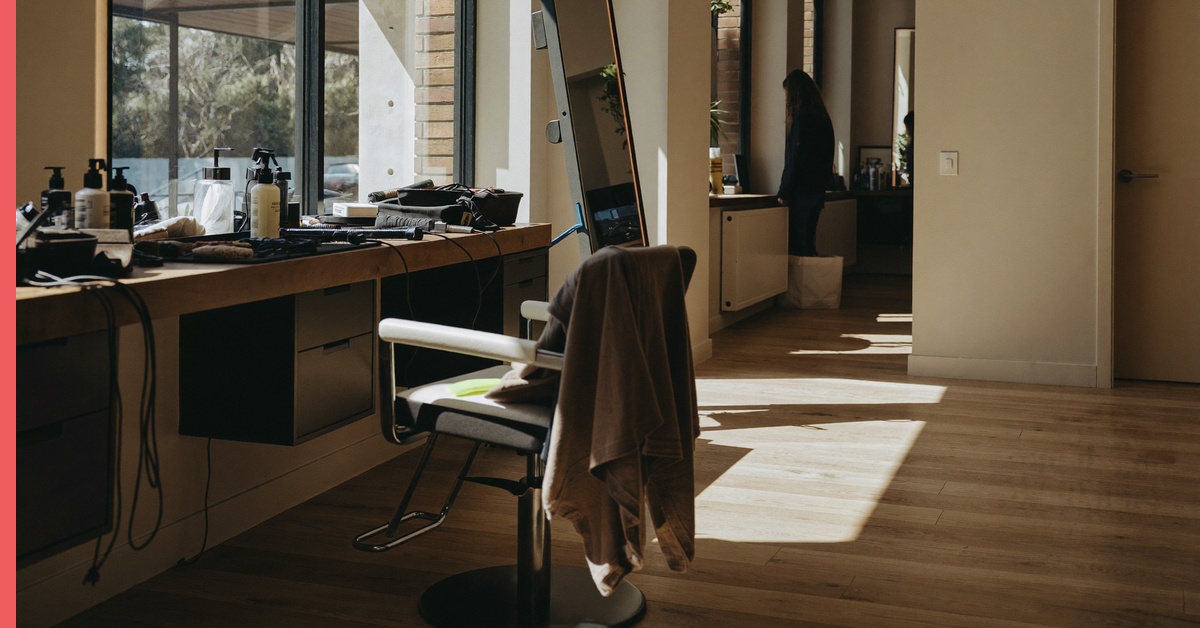
It is 3pm. The chair is empty, the hour is already paid for, and nobody is coming.
You blocked out ninety minutes. You turned away two people who wanted that slot. And at 3.11pm you stop watching the door and start doing sums in your head.
This post is about how to reduce no-shows in a salon: what they cost over a year, why they happen, and the one message that fixes most of them without you typing a word.
Few things in a salon leak this much, this quietly. A no-show never shows up on a report as a loss, because the booking simply stops existing. The colour is mixed, the hour is gone, and nothing anywhere records it.
Do the maths. It is worse than it feels
One no-show feels annoying. A year of them is a different conversation.
Here is an illustrative example, using round numbers so you can swap in your own:
- 3 no-shows a week
- at a $75 average service
- is $225 a week
- over 48 working weeks, that is $10,800 a year
These numbers are illustrative, not a benchmark. Run them again with your own average service price and your own honest count, and the figure will be yours.
Now look at that number as a thing rather than an amount. It is a new basin. It is a year of marketing. It is a proper holiday. It is a pay rise for the person who has been carrying your Saturdays. Paid, instead, to nobody at all.
And that is only the appointment. It does not count the client you turned away for that slot, the stock you opened, or the hour you could have spent at home.
Try this today. Scroll back through last month in your calendar and count the no-shows. Not an estimate, an actual count. Most owners guess low by half. That number, times your average service, times twelve, is what this is worth to you.
Why clients actually no-show
It is tempting to take it personally. Mostly, you should not.
A small number of people are genuinely inconsiderate. The overwhelming majority are busy, well meaning clients who booked six weeks ago, meant to come, and then had a day that ate itself. School pickup moved. A meeting ran late. They wrote it on the calendar on their old phone.
That distinction matters, because it changes the fix. If most no-shows were rudeness, you would need a policy with teeth. Since most no-shows are forgetting, what you need is a reminder that arrives at the right moment and asks for one tap back.
A friendly nudge, not a lecture. And it works on the people a strict policy never reaches, because those people were never trying to get away with anything.
How to reduce no-shows in a salon: the one-text fix
The single highest return change most salons can make is an automatic SMS reminder before every appointment, with a reply to confirm.
It is not a new idea, and that is the point. It is one of the most studied nudges there is. A systematic review of eight controlled trials covering 6,615 people found attendance rose from 67.8% with no reminder to 78.6% when a text reminder went out. Roughly one in nine bookings that would have evaporated turned up instead, from a message nobody had to write.
In Simple Salon, reminders are built in and ready to switch on. You choose when they go out, and whether it is one message or two: a week ahead for the people who plan, a day ahead for the people who do not. The client confirms with a reply. You walk in each morning already knowing who is coming.
Set it up once. It runs every day after that, on every appointment, without anybody remembering to do it. That is what makes it different from you personally texting your Saturday clients on a Friday night, which works right up until the week you are too tired.
The same messaging that sends your reminders also sends your campaigns, so the 1-Touch Marketing tools you set up here do double duty later.
Lock it in further with deposits
Reminders fix forgetting. Deposits fix everything else.
When a client pays a deposit at the moment of booking, the appointment stops being a loose intention and becomes a commitment. It is held. Both of you know it is held. Around 50% is the sweet spot for most salons, and clients accept it as completely normal, because they are already paying deposits for restaurants, hotels and everything else in their week.
It reads as professional. A salon that asks for a deposit is a salon whose time is worth protecting, and clients treat that booking with exactly the same respect you do.
If your booking page is already live, deposits are a switch on the same page. Part 2 walks through the deposit setup inside your booking flow, and Part 3 covers getting that booking page in front of people in the first place.
Reminders plus deposits is the whole belt and braces. The reminder catches the forgetful client. The deposit catches the casual one.
What it costs to run
Less than one no-show. That is the honest answer.
On the Pro and Max plans a monthly SMS allowance per operator is included, so reminders just run inside what you are already paying. Pricing is per Bookable Operator, capped at 7 operators, with no hidden fees.
Put it next to the illustrative $10,800 above and the decision makes itself. One recovered appointment a month covers it several times over, and you will recover a great deal more than one.
What changes in a month
Two things, and owners mention them in the same order every time.
The first is the mornings. You open the calendar and it is already confirmed. No mental arithmetic about who might not come, no half-planned backup, no keeping a gap warm just in case. The day you are looking at is the day you are going to have.
The second is that the awkward conversation disappears. You stop chasing people, and you stop rehearsing what you would say if they turned up next time. The system asked, the client answered, and none of it needed you to be the bad guy about it.
Back in Part 1, the no-show was leak number three of five. This is that leak closed.
Frequently asked questions
How do salons reduce no-shows?
The two changes that do most of the work are automatic SMS reminders before every appointment, with a reply to confirm, and a deposit taken at the time of booking. Reminders catch the clients who simply forgot, which is most of them. Deposits commit the booking from the moment it is made. A written no-show policy helps, but only after those two are running.
Do appointment reminder texts actually work?
Yes, and it is well evidenced. A systematic review of eight controlled trials covering 6,615 people found attendance rose from 67.8% without a reminder to 78.6% when a text reminder was sent. Text reminders performed about as well as phone calls and cost considerably less to send.
Should a salon charge a deposit or a no-show fee?
A deposit is the better tool. It is taken up front, it is positive, and it holds the appointment rather than punishing someone after the fact. A no-show fee has to be chased, which costs you an awkward conversation and sometimes the client as well. Around 50% at the time of booking is a common setting.
What should a salon no-show policy say?
Keep it short, visible and consistent. State the notice period for changing or cancelling, what happens to the deposit inside that window, and where the client can reschedule themselves. Put it on your booking page so it is agreed at the point of booking, not discovered afterwards.
Already with Simple Salon? Your SMS reminders are built in and waiting. Turn on SMS reminders today, pick your timing, and let this week be the last one you spend watching the door at 3pm.
Not with us yet? This is what you would be switching on: reminders that send themselves, replies that confirm the booking, and deposits that hold the appointment from the moment a client makes it. All of it running while you are with someone else.
The Booked Solid series
Six weeks on filling your salon’s calendar automatically.
- Part 1: 5 Money Leaks Quietly Costing Your Salon Bookings
- Part 2: How to Set Up Online Booking for Your Salon in 5 Steps
- Part 3: How to Add a Book Now Button to Instagram
- Part 4: The Real Cost of Salon No-Shows (and the One-Text Fix) (you are here)
- Part 5: 5 Salon SMS Templates That Fill Quiet Days
- Part 6: The Booked Solid Checklist: Set Up Your Salon for a Fully Booked Spring