
What Changed When This Salon Stopped Double-Keying Payments
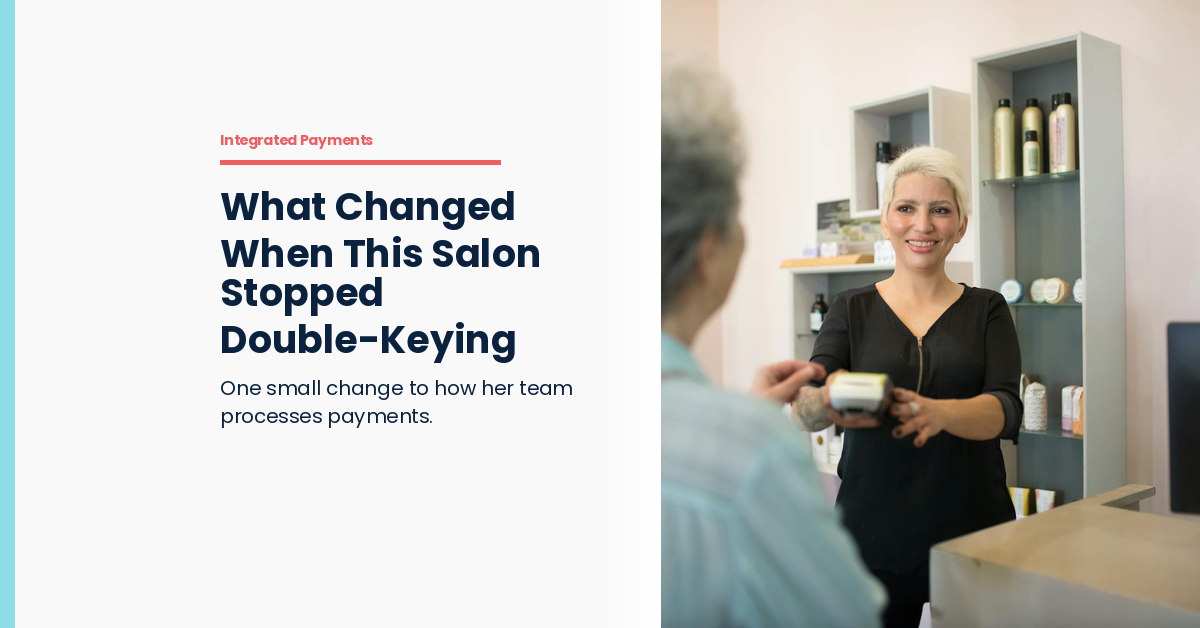
Sarah had been running her hair salon for six years when she finally connected her EFTPOS terminal to Simple Salon.
She'd heard about integrated payments before. She'd clicked past the feature in settings more than once. It always felt like something to do "later, when things quieten down."
Then one Thursday evening, after spending 40 minutes tracking down a $30 discrepancy in her end-of-day totals, she opened the settings, found the Integrated EFTPOS section, and set it up.
It took about five minutes.
"I didn't realise how much noise there was"
The first thing Sarah noticed wasn't the time saved. It was the silence.
"I didn't realise how much mental energy I was spending on payments until it was gone," she said. "Every transaction used to require someone to check the terminal, read the number, type it in. Now they just press Process Payment and the client taps. That's it."
Her team adapted within a day. The new checkout wasn't complicated - it was just fewer steps.
By the end of week one, her evening reconciliation had dropped from around 30 minutes to under five.
What actually changed (and what didn't)
It's worth being specific about what integrated payments does - and doesn't - change.
What changed for Sarah:
Checkout errors dropped to zero in the first month. Previously, her team averaged two to three transposition errors per week.
End-of-day reconciliation time halved. Because payment records in Simple Salon matched terminal records exactly, there was nothing to chase.
Staff confidence improved. Two junior staff who'd been anxious about taking payments - particularly for larger colour bills - said they found the new flow less stressful.
The EFTPOS terminal and software totals always matched, which meant she could close the day knowing the numbers were right.
What didn't change:
The client experience at checkout remained smooth and familiar. Clients tap exactly as they did before. Pricing, memberships, and service setup in Simple Salon was untouched. Training the team on the new flow took one conversation.
"The setup was the hardest part - and it wasn't hard"
Sarah had assumed there would be configuration steps, a call to the bank, maybe a few days of testing. There weren't.
She had her Merchant ID and Terminal ID on file from when the terminal was first installed. She entered them into Simple Salon's Integrated EFTPOS settings, confirmed the pairing, and ran a test transaction.
"I was ready to call support," she said. "But it just worked."
What three months in looks like
Three months later, Sarah says integrated payments has become one of those features she no longer thinks about - which is exactly the point.
"It's invisible now. The total goes to the terminal, the client taps, and we move on. I haven't had an end-of-day discrepancy in three months."
She also noted an unexpected benefit: her bookkeeper now spends less time reconciling payment records, because the data in Simple Salon is clean and accurate.
"It solved a problem I'd normalised. I'd just accepted that end-of-day would take 30-something minutes and occasionally involve a discrepancy I couldn't explain. I didn't know it didn't have to be that way."
If this sounds like your salon
If you're still keying payment amounts manually into a standalone EFTPOS terminal, this is the part where we gently tell you: you don't have to be.
The setup takes about five minutes. The difference shows up on day one.
See how integrated payments works in Simple Salon. Explore Integrated Payments →