
The Salon Checkout Moment That Changes Your Rebooking Rate
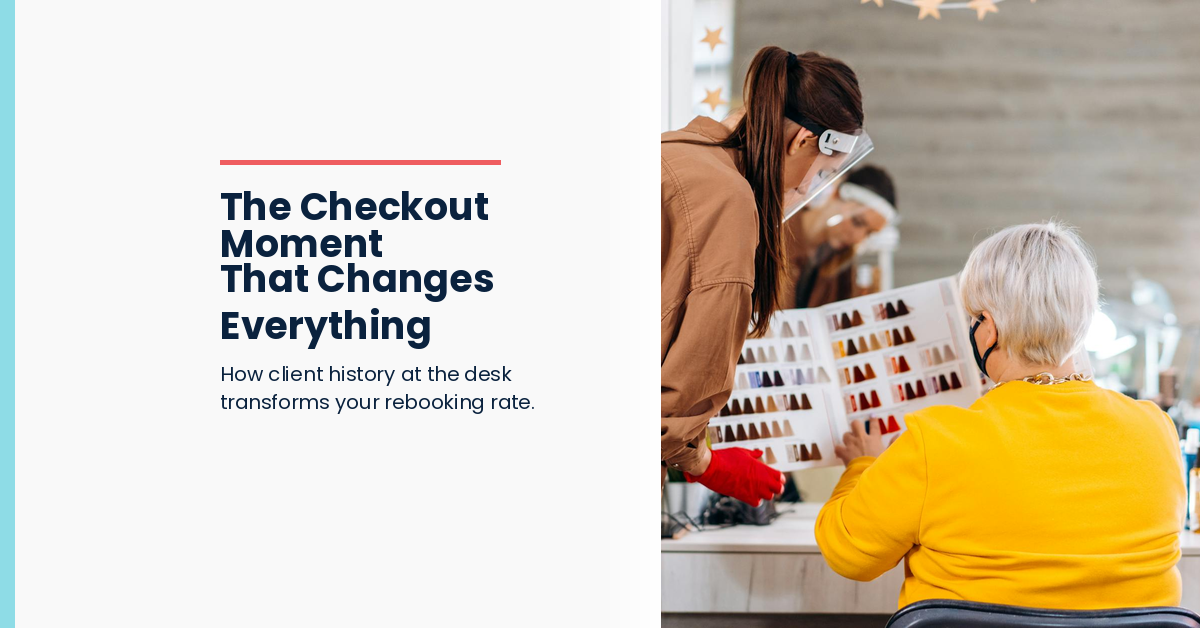
Of all the moments in a client's visit, one is more important for retention than any other.
It's not the consultation. It's not the service itself, however well it goes. It's the 90 seconds at the checkout desk - the moment where the visit ends and the next one is either locked in or left to chance.
Clients who rebook at checkout are significantly more likely to become long-term regulars than clients who leave without booking. That fact alone is worth building a habit around. But there's a layer most salons miss: the conversation at checkout is far more natural, and far more effective, when it's informed by what you already know about the client.
This week, we're exploring the checkout moment in full - what makes it powerful, how client history changes the dynamic, and what Simple Salon's POS does to support it.
Why checkout is the highest-leverage moment
Think about what's true at the end of a great appointment.
The client is happy. They've just experienced your best work. They're sitting in front of a mirror with a result they love. Their guard is down. They feel connected to their stylist. And they're in exactly the right headspace to think about coming back.
This is the optimal moment for a rebooking conversation. And yet, for many salons, checkout gets compressed into a transaction: take the payment, hand over the receipt, say goodbye. The rebooking either happens quickly and almost accidentally, or it doesn't happen at all.
Simple Salon's data reinforces what the research says: clients who rebook within 24 hours of their visit - at checkout - have measurably higher long-term retention rates than those who don't. The momentum of a great visit is real, and it dissipates quickly. The checkout moment is the window.
How client history changes the checkout conversation
Here's where the Client Card becomes directly relevant to your rebooking rate.
When you process a client through POS at the end of their visit, Simple Salon surfaces their history - including their previous visit timing, what they had done, and any notes your team has added. And at the end of the sale, a Rebook Reminder prompt appears, suggesting the rebooking conversation based on their service and your target rebook period.
This changes the dynamic from: "Would you like to book your next appointment?" (generic, easily deflected)
To something much more natural: "So your colour usually needs refreshing around eight weeks - that puts us at the middle of June. Want me to grab you the same time slot?"
That second version doesn't feel like a sales question. It feels like competence. It signals that you know their history, you're thinking ahead for them, and you're making it easy. Most clients will say yes - not because they were pushed, but because you made it obvious and simple.
The client history doesn't just help during the service. It helps close the loop at the end of it.
The retail dimension
Client history at checkout also changes the retail conversation.
When you can see what products a client has purchased before - and whether they're likely to be running low - you can make a recommendation that feels genuinely helpful rather than an upsell.
"You bought the moisture treatment six weeks ago - did that work well for you? We've got a new version that's been popular."
Or simply: "You're probably due for a refresh on your toning shampoo."
A recommendation grounded in a client's actual history is categorically different from a generic prompt at the register. And clients who feel that the recommendation is for them - not for the salon's sales targets - are far more likely to respond positively.
The Client Card's product purchase history makes this possible at every checkout, for every client, regardless of which team member is processing the sale.
Building the checkout habit with your team
The tools are only as effective as the habits built around them. Here's how to make checkout a genuine retention moment across your whole team:
Before every checkout: Pull up the client's profile. Spend 10 seconds scanning their history and notes. Know what they came in for, when they were last in, and what you know about them.
During checkout: Use the information. Reference their service history in the rebooking suggestion. Make it specific. Clients can tell the difference between a generic question and one that's based on knowing them.
After checkout: Add a note. Anything relevant for the next visit - how the client responded to the service, what they mentioned, what would make their next appointment better.
Use the Rebook Prompt: When Simple Salon surfaces the rebooking prompt at the end of a POS transaction, use it as a cue. It's the system reinforcing the habit.
The checkout moment compounds over time
Here's what makes this worth prioritising: the checkout moment, done well, doesn't just affect today's rebooking rate. It compounds.
A client who's rebooked at checkout is in the calendar. They're less likely to drift. They'll receive their appointment reminder. They'll show up. And at that next visit, the cycle continues - another informed checkout, another natural rebooking conversation, another note added for the time after that.
Over months and years, this builds the kind of client relationship that doesn't require maintenance - because the relationship itself is the system.
Review your client history before your next five checkouts this week. See what it changes about the conversation - and the outcome.
See how Simple Salon's POS and Client Card work together See how Simple Salon's POS and Client Card work together →